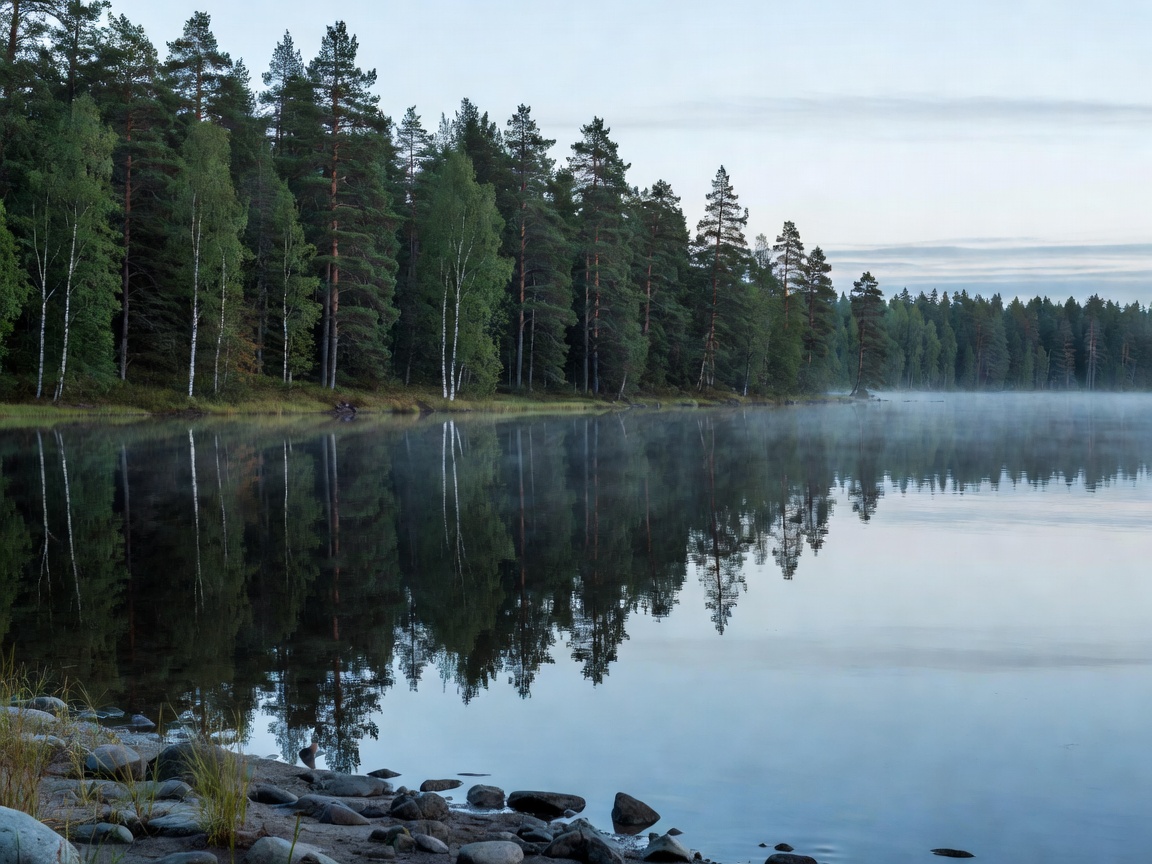
Location assessment
Confirm what “lakeside” means.
The word can describe a view, a nearby public shore, a shared waterfront or direct access from the property. These are different arrangements. Ask how far the cabin stands from the water and whether guests have permission to use the shoreline. A map pin or photograph may not explain ownership, access rights or the route on foot.
Check whether the sauna itself sits near the shore. Some cabins have a main cottage set back among trees and a separate sauna closer to the lake. Others place both buildings farther inland. The distance matters after bathing, when you may be barefoot or carrying a towel in changing weather.
Read the shape of the shore
A gradual, clear entry can suit easy wading. A steep bank, rocks, reeds, slippery steps or a dock may require more care. Look for current photographs and written access details. Ask whether the entry changes with water levels and whether a dock is seasonal. Do not assume that a dock is installed or safe for swimming just because one appears in an old image.
Water temperature, depth and visibility vary. There may be no lifeguard, marked swimming area or changing shelter. Treat an unfamiliar shore cautiously. Check local guidance, supervise children closely and avoid entering water if conditions are uncertain. Winter swimming requires particular preparation and a safe entry and exit plan. It is optional, not a required part of sauna bathing.
Forest, privacy and neighboring properties
Trees can screen a cabin from roads and nearby buildings. They can also limit daylight, views or the feeling of open space. A shore can be shared with neighboring cabins or used by the public. Find out where boundaries lie and whether outdoor spaces are overlooked. A private interior does not guarantee a secluded shoreline.
Consider noise as well as sightlines. Nearby roads, boat routes, public paths and neighboring outdoor areas affect the level of quiet. If privacy matters, ask about the distance to the nearest property and what can be seen from the sauna windows or terrace. Large windows may frame water beautifully while exposing the interior after dark.
Road approach and arrival
Remote settings can add time and effort to arrival. Check the final route, parking position and distance from parking to the cabin. A short walk over a firm path differs from carrying bags along a steep trail. If access includes a private road, find out whether it is maintained and whether arrival instructions are clear.
Winter changes the calculation. Snow, ice, darkness and limited daylight can make the last section slower. Ask who clears the access route and whether ordinary vehicles are suitable. This guide does not provide live road or weather information. Check current conditions with relevant local sources and the accommodation contact before travelling.
Seasonal conditions shape the setting
Summer offers longer daylight in much of the north, but weather, insects and water conditions still vary. Spring can bring wet ground and changing shore levels. Autumn brings shorter days and cooler outdoor transitions. Winter may mean frozen water, snow-covered paths and a different heating routine. None of these conditions can be assumed from a photograph taken in another month.
Daylight affects more than scenery. It determines how easy it is to find the sauna, fetch water, carry firewood and move safely outside. Check exterior lighting and bring a headlamp if recommended. Ask whether lake access remains usable through the dates you are considering.
Good for
- Water access: a clearly described shore with a suitable entry for your group.
- Quiet: a setting with known neighboring properties and outdoor sightlines.
- Winter stays: a maintained approach and safe movement between buildings.
- Easy arrivals: parking and a path that match your luggage and mobility needs.
What to know before choosing
Location descriptions are not guarantees of privacy, safe swimming or all-season access. Ask direct questions and request current, specific information. Consider your group’s mobility, comfort in cold conditions and ability to manage a less developed shore.
Balance the view against the route. A cabin farther from the water may offer better shelter, simpler access and more privacy. A shore-side sauna may shorten the walk but be more exposed. Use the cabin types guide to compare layouts, then check the available facilities.
Practical checklist
- Is access direct, shared, public or only a view?
- How far is the shore from the sauna and sleeping building?
- What is the shore entry like, and is it seasonal?
- Are there nearby buildings, paths or roads?
- How are winter roads and paths maintained?
- What exterior lights, steps and handrails are present?
- What current local conditions should you verify before travel?