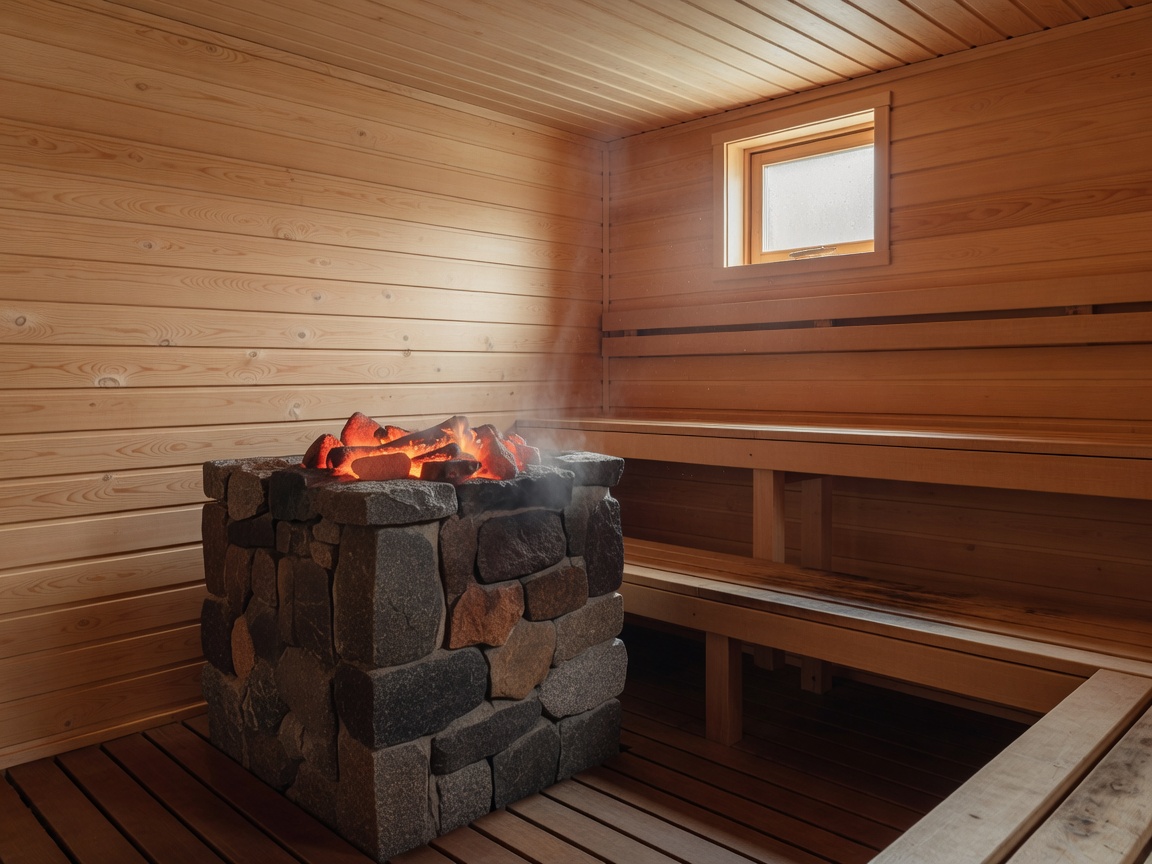
The bathing room
What makes a traditional sauna?
A traditional Finnish sauna commonly uses a heated room, a stove and stones. The stove warms the stones and the surrounding air. Pouring a small amount of water onto hot stones creates löyly: a brief wave of warm, humid air. The feel depends on the heater, room, stone mass, ventilation and the amount of water used.
Many traditional cabins use a wood-fired stove. The fire requires fuel, airflow and time. A user should follow the stove’s instructions and never leave an active fire unattended. Some saunas use electric heaters and stones. The heating source changes preparation, but the central experience still involves heat, stones and controlled moisture.
Heating the room
Allow the sauna to warm according to the stove or cabin guidance. A wood heater may need a sustained fire before the stones are ready. Ventilation should work as designed; do not block vents to make the room hotter. If a thermometer is present, treat it as a guide rather than a target every guest must reach.
Sauna temperatures vary by room, measurement height, heater and personal preference. A broad range around 70–100°C is often encountered in hot Finnish-style saunas, but it is not a rule or a goal. Conditions lower or higher may occur. Leave or reduce exposure if you feel unwell, dizzy or uncomfortable. Do not assume someone else’s comfortable temperature will suit you.
Water on stones and löyly
Use only the water and method permitted by the cabin instructions. Add a small amount to the stones and allow the heat to settle before adding more. Water on stones can increase humidity and perceived heat. Do not throw water onto an electric heater unless its instructions allow it. Never use oils, scented liquids or other additives unless explicitly permitted.
Guests may differ in how much steam they prefer. Ask the others in the room before adding water, opening a door or changing the heater. Shared sauna etiquette is simple: communicate, keep the space safe and make room for different comfort levels.
A flexible bathing sequence
A session may include washing, warming, a break to cool down and rest, then another visit to the hot room. Some people rinse before entering; some wash after. The routine varies by household, region, cabin and personal preference. There is no need to follow a fixed number of rounds.
Cooling can mean sitting in fresh air, taking a shower or entering a lake where conditions are known and safe. A cold plunge is optional. Check footing, water access, temperature and exit arrangements. Never enter unfamiliar, icy or unsafe water simply because a sauna stay is underway. Keep warm clothing and a towel close by.
Birch whisk traditions
A birch whisk, called a vihta or vasta in different Finnish regions, is a bundle of leafy birch twigs used gently in sauna traditions. It may be fresh or prepared for later use. Practice and terminology vary. It is optional, and not every cabin provides one or permits its use.
Before using a whisk, check house rules, ask others in the room and avoid forceful contact. Do not cut branches from trees without permission. If you bring a prepared whisk, ask whether it can be used on the heater or cleaned in the cabin. Respect the space and leave it tidy.
Etiquette and cabin differences
Sauna is a private and social practice. Customs around swimwear, nudity, gender groups and conversation differ between families and facilities. Follow the host’s instructions and the group’s comfort. Ask before photographing anyone. Keep glass containers outside, use a towel to sit on if requested, and leave the floor and benches clean.
A modern cabin may have an electric heater, timer and shower close by. A more traditional separate sauna can involve carrying water and tending a fire. Neither format defines a more authentic experience for every guest. Check instructions, ventilation and the route outdoors before heating begins.
Good for
- First-time guests: a clearly explained heater and a flexible, low-pressure routine.
- Fire experience: a wood-heated sauna with time to prepare and attend the stove.
- Different comfort levels: a group that agrees on steam, breaks and privacy.
What to know
Sauna bathing is not medical treatment. Individual tolerance varies. Avoid alcohol and follow relevant medical advice. Children need close adult supervision. Use the sauna only as directed, and stop if you feel unwell. Confirm whether the cabin supplies towels, water for washing and firewood.
Practical checklist
- Read the stove and ventilation instructions first.
- Confirm what may be poured onto the stones.
- Set out water, towels and warm clothing.
- Agree on privacy, steam and shared-room etiquette.
- Check that outdoor cooling and lake entry are safe and optional.
For layout and heating choices, read cabin types. For supplies and setup, use the facilities checklist.